
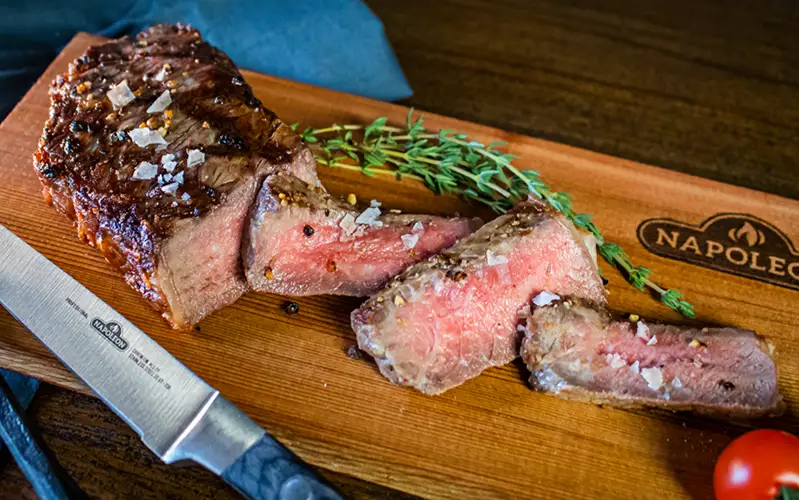
Nothing says summer like a sizzling steak on the grill.
But many backyard barbecues are falling short of steakhouse-quality results. While premium equipment can elevate the experience, technique remains the most important factor in achieving consistent results – often making the difference between a juicy, flavourful steak and one that misses the mark on texture and doneness.
“Steaks are an expensive cut of meat, so it’s worth taking a few extra steps to get them right on the grill,” says Garry Scott, Vice President of Marketing at Napoleon. “The good news is that small adjustments in timing and technique can make a noticeable difference in the final result.”
With June recognized as National Steak Month and the unofficial kickoff to the summer grill season, Napoleon is highlighting four common steak-grilling mistakes – and how small adjustments can help improve results.
- Grilling Steak Straight from the Fridge: One of the most common mistakes is grilling steak straight from the fridge. Cooking a cold steak often leads to uneven results, with an overcooked exterior and an undercooked center. Letting the steak rest at room temperature for 20-30 minutes before grilling helps it cook more evenly. Some home cooks also rely on internal-temperature tools – such as digital thermometers – to gauge doneness more precisely.
- Seasoning Too Late: Seasoning just before the steak hits the grill doesn’t allow enough time for flavor to develop or for a proper crust to form. Seasoning at least 30-40 minutes ahead of cooking is generally recommended. Clean grill grates also play an important role in achieving a good sear, since residue can interfere with surface contact and heat translation. Tools like grill brushes, including Palmyra-bristle options, are commonly used to help maintain cooking surfaces.
- Flipping the Steak Too Often: Frequent turning prevents a proper sear from forming and interrupts crust development. Allowing each side to cook undisturbed for a few minutes helps build that exterior texture many home cooks are aiming for. In most cases, steaks should only be flipped once – using tongs or a spatula, and consistent heat distribution on the grill can also make this process easier to manage.
- Cutting Into the Steak Too Soon: Cutting into the steak too soon can cause juices to escape before they’ve had a chance to redistribute. Resting the steak for 5–10 minutes after cooking helps maintain tenderness and moisture. Temperature monitoring tools can help cooks pull the steak at the right moment, reducing the need to check doneness by cutting into it early.
“The difference between a good steak and a great one often comes down to a few simple habits,” says Scott. “Mastering those basics can completely elevate your steak from good to great.”