If you’ve spent any time house-hunting on the west side of Victoria, in Oak Bay, or up toward the Highlands, you’ve probably heard the term “West Coast Modern” thrown around by realtors and architects alike. It’s one of the most referenced — and most misunderstood — style labels on the island. Some buyers assume it just means “a newer house with big windows.” Others confuse it with generic contemporary builds from anywhere else in North America.
West Coast Modern is a distinct architectural movement with deep roots in this region, and understanding what defines it will help you shop smarter, whether you’re looking for an original mid-century example or a modern home built in that tradition.
Where the Style Comes From
West Coast Modern emerged in British Columbia in the 1940s through the 1960s, largely out of Vancouver but with strong influence across the coast, including Victoria and the Gulf Islands. Architects like Ron Thom, Arthur Erickson, and Fred Hollingsworth were working with a simple problem: how do you build a home that responds to this specific climate and landscape — the rain, the cedar forests, the rocky coastline, the mild winters — instead of importing a style from somewhere else?
The result was a regional take on modernism that prioritized natural materials, connection to the outdoors, and a quieter, more understated aesthetic than the more ornamental styles popular elsewhere at the time.
The Defining Features
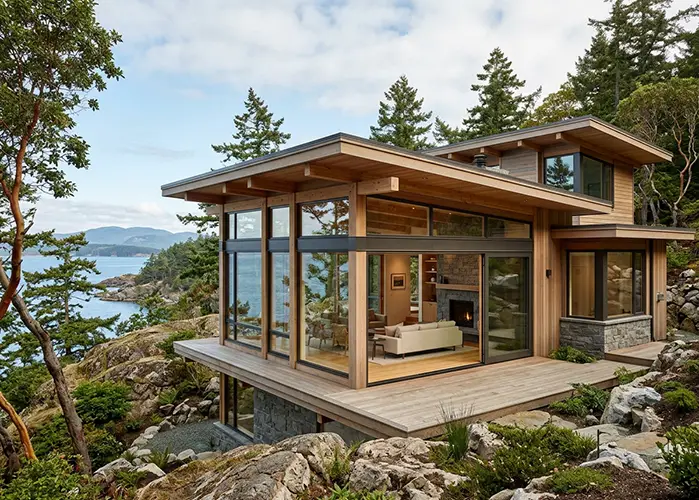
Extensive use of wood: Post-and-Beam construction is the structural signature of the style — exposed wood beams and posts, often left unpainted, that serve as both support and visual feature. Cedar siding, both inside and out, is common.
Walls of glass: Large windows and often full glass walls blur the line between indoor and outdoor space. In a region with as much natural scenery as Victoria, this isn’t decorative — it’s the whole point of the design.
Low-pitched or flat rooflines: Rooflines tend to be simple and horizontal, often with deep overhangs that shelter windows from rain while still letting in low winter light.
Open, flowing floor plans: fewer interior walls, more open sightlines between living spaces, and a general resistance to unnecessary ornamentation.
Integration with the site: West Coast Modern homes are typically designed around their specific lot — built into a slope, oriented around mature trees, or angled to capture a particular view — rather than following a repeatable floor plan.
Natural, muted materials: Think cedar, stone, and glass over stucco or brick. Color palettes lean toward the tones already found outside: greens, greys, warm browns.
Where to Find It in Victoria
Victoria has a meaningful concentration of original West Coast Modern homes, particularly in:
- Oak Bay and Uplands — some of the most architecturally significant examples on the island, often on larger treed lots
- Ten Mile Point and Gordon Head — mid-century homes designed to take advantage of ocean and forest views
- The Highlands — newer builds that continue the tradition on larger, more rural properties
Many original homes from the 1950s–60s have been renovated over the years, so it’s worth asking a realtor familiar with the style to help distinguish a true architect-designed original from a home that’s simply borrowing the aesthetic.
What to Look For (and Ask About) as a Buyer
- Roof and window condition — flat and low-pitch roofs plus large glass expanses need particular attention in a rainy climate; ask about roofing history and any water intrusion issues
- Original vs. renovated — original post-and-beam construction and untouched wood detailing can carry real value for buyers interested in mid-century architecture specifically
- Heating and insulation — many original homes predate modern insulation standards, so factor in potential upgrade costs
- Site orientation — part of the appeal is how the home sits on its lot, so pay attention to privacy, sun exposure, and view corridors, not just square footage
Is West Coast Modern Right for You?
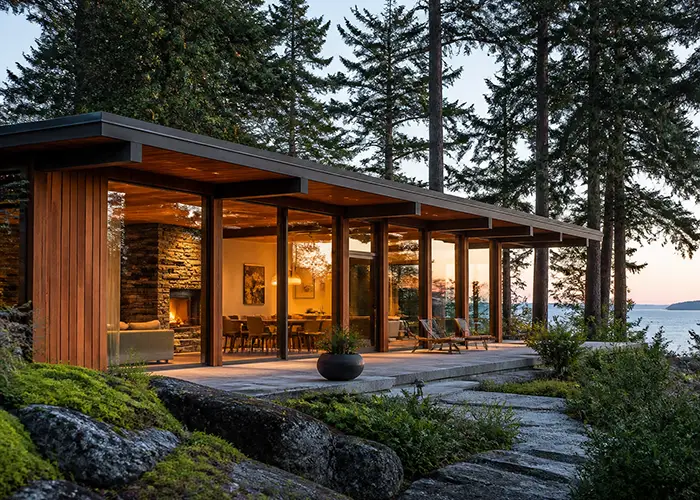
This style suits buyers who want a home that feels connected to the landscape rather than closed off from it, and who appreciate simplicity and natural materials over more traditional or ornate finishes. It’s a particularly good fit if outdoor living, natural light, and a strong sense of place matter more to you than a move-in-ready, fully modernized interior.
For buyers newer to the category, working with an agent who knows Victoria’s architectural history is worth it — the difference between a genuine West Coast Modern home and a home that simply looks the part often comes down to details a general listing description won’t capture.